 TICKETS
 Match Day
Our club
The story of the Catalans Dragons is one of an ascent born from a merger and driven by an entire region.
At the crossroads of two powerful legacies, XIII Catalan and Saint-Estève, a new ambition was born in 2000: to create a structure capable of proudly carrying the colours of French rugby league. From this founding union emerged the Union Treiziste Catalane, soon propelled onto the international stage with the entry of the Catalans Dragons into the Super League in 2006.
What followed was not just a sporting journey, but the story of a remarkable rise, fuelled by landmark victories, a steadily growing fanbase, and a region deeply united behind its “Sang et Or”.
From sometimes difficult early steps to continental highs, from stadium renovations to sold-out crowds, from emerging young talents to iconic moments at Wembley, the Dragons’ story is that of a club that has continually pushed the boundaries of what is possible, season after season.
From its origins to entry into the Super League
(2000–2006)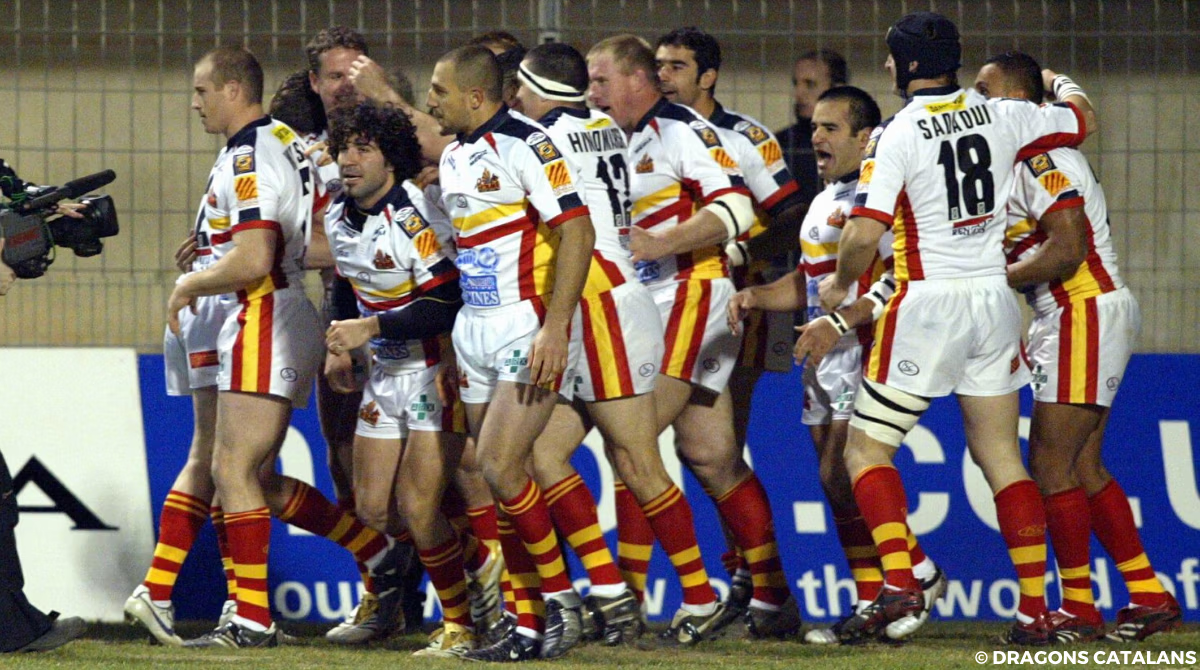
Founded in 2000 from the merger of XIII Catalan and Saint-Estève, two strongholds of French rugby league, the Union Treiziste Catalane (UTC) achieved a Cup–Championship double in 2005 before committing the following year, at the request of the British Rugby Football League, to fielding a professional team in the Super League.
In 2006, the Catalans Dragons made their debut in the competition. Despite a challenging first season, finishing at the bottom of the table, they recorded a memorable victory at Warrington as well as several home wins, played at different venues due to renovation works at Gilbert Brutus.
The early rise and the Wembley journey
(2007–2008)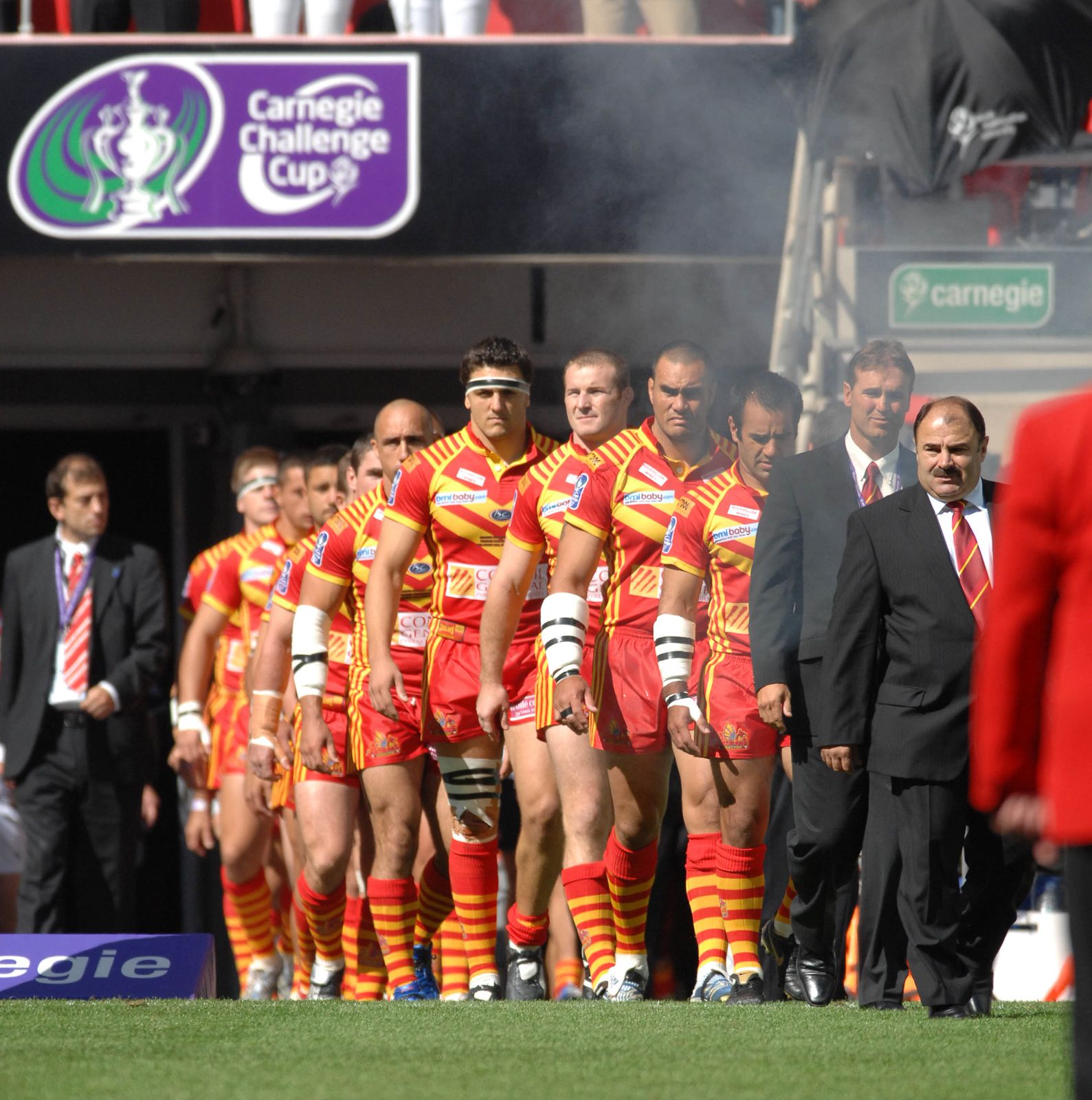
In 2007, the Dragons made rapid progress: a rise in season ticket holders, strong backing from sponsors, ten wins, and a historic Challenge Cup final at Wembley, in front of a record crowd for a French club with 84,241 spectators.
The momentum was confirmed in 2008 with a third-place finish in the league table, qualification for the playoffs, and the arrival of major new partners such as IDEC and GL Events. Attendance at Brutus then reached unprecedented levels.
Building the future
(2009–2012)
Blue, white, red
2013-17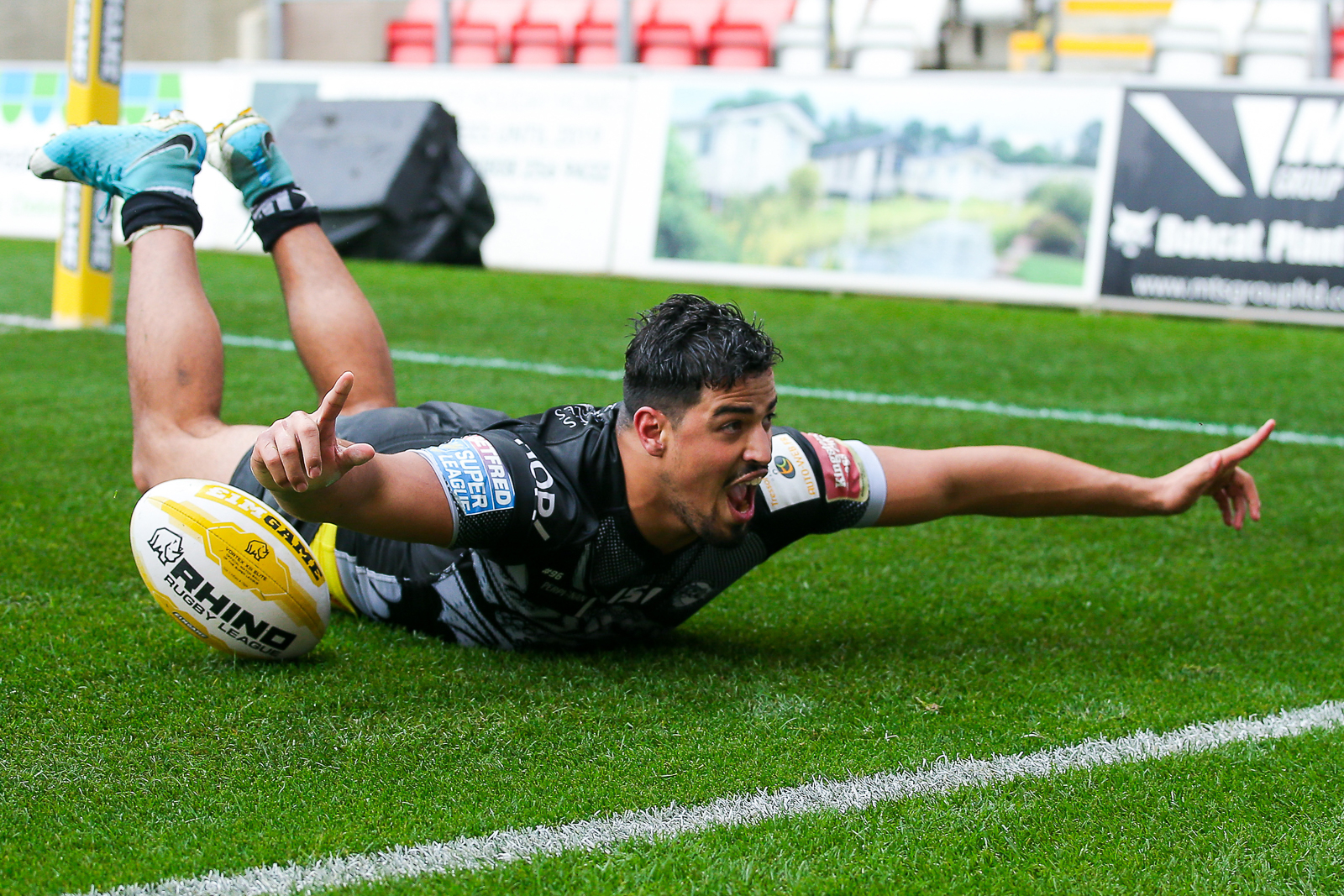
The years 2013 to 2017 were marked by the emergence of young talents such as Fouad Yaha and Lucas Albert, symbols of the success of Catalan player development. This period also saw the appointment of Laurent Frayssinous, who became the first French head coach in the club’s history.
The Dragons reached another Super League semi-final in 2014 after a remarkable playoff run.
The following seasons were again marked by inconsistent results, leading the club to compete in the Million Pound Game in 2017. Laurent Frayssinous left his position and was replaced by Steve McNamara. The Dragons secured their Super League status in this do-or-die match thanks to a heroic victory on the pitch at Leigh.
The achievement: a first historic title
(2018)
Among the elite
2019-2025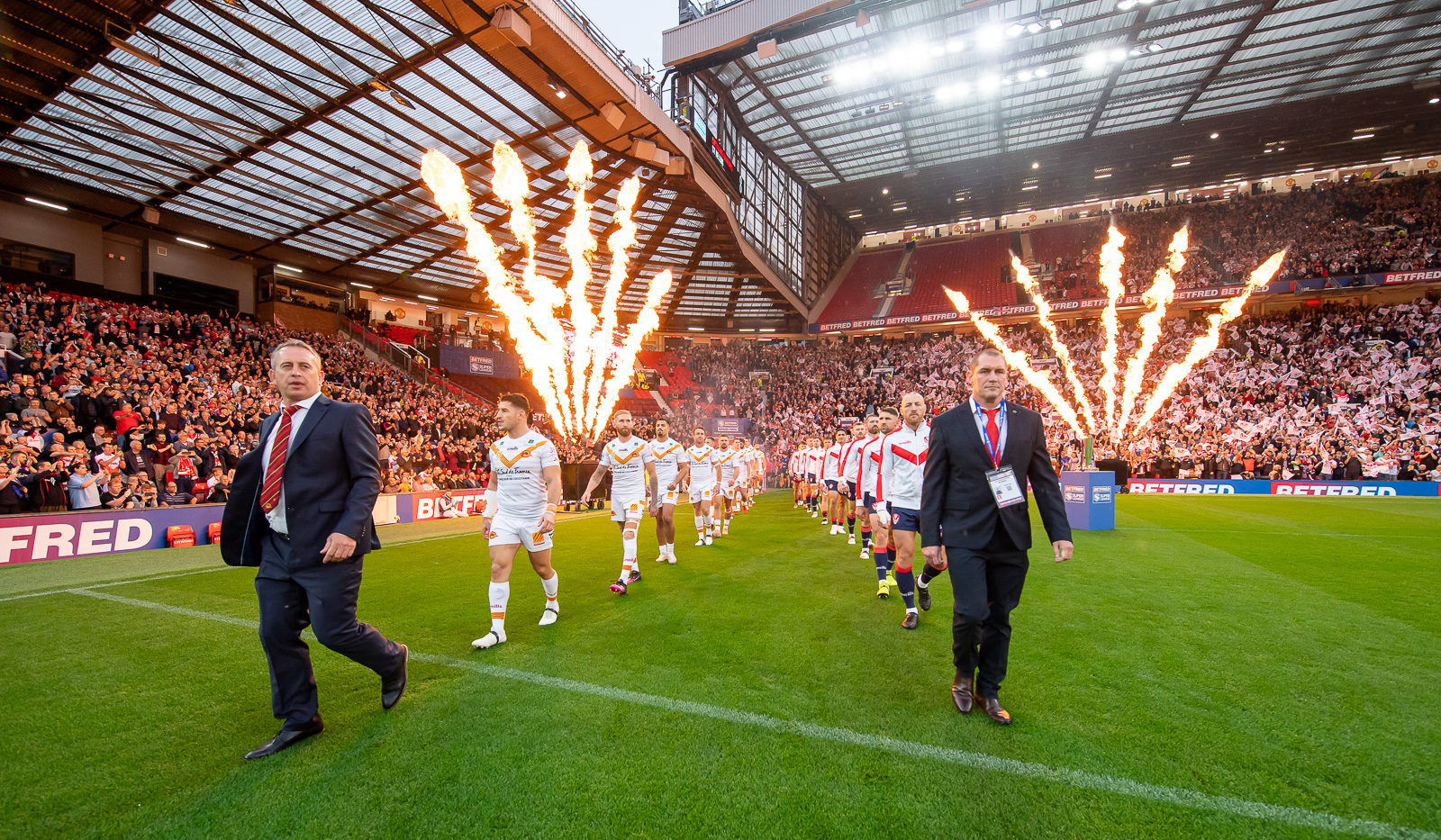
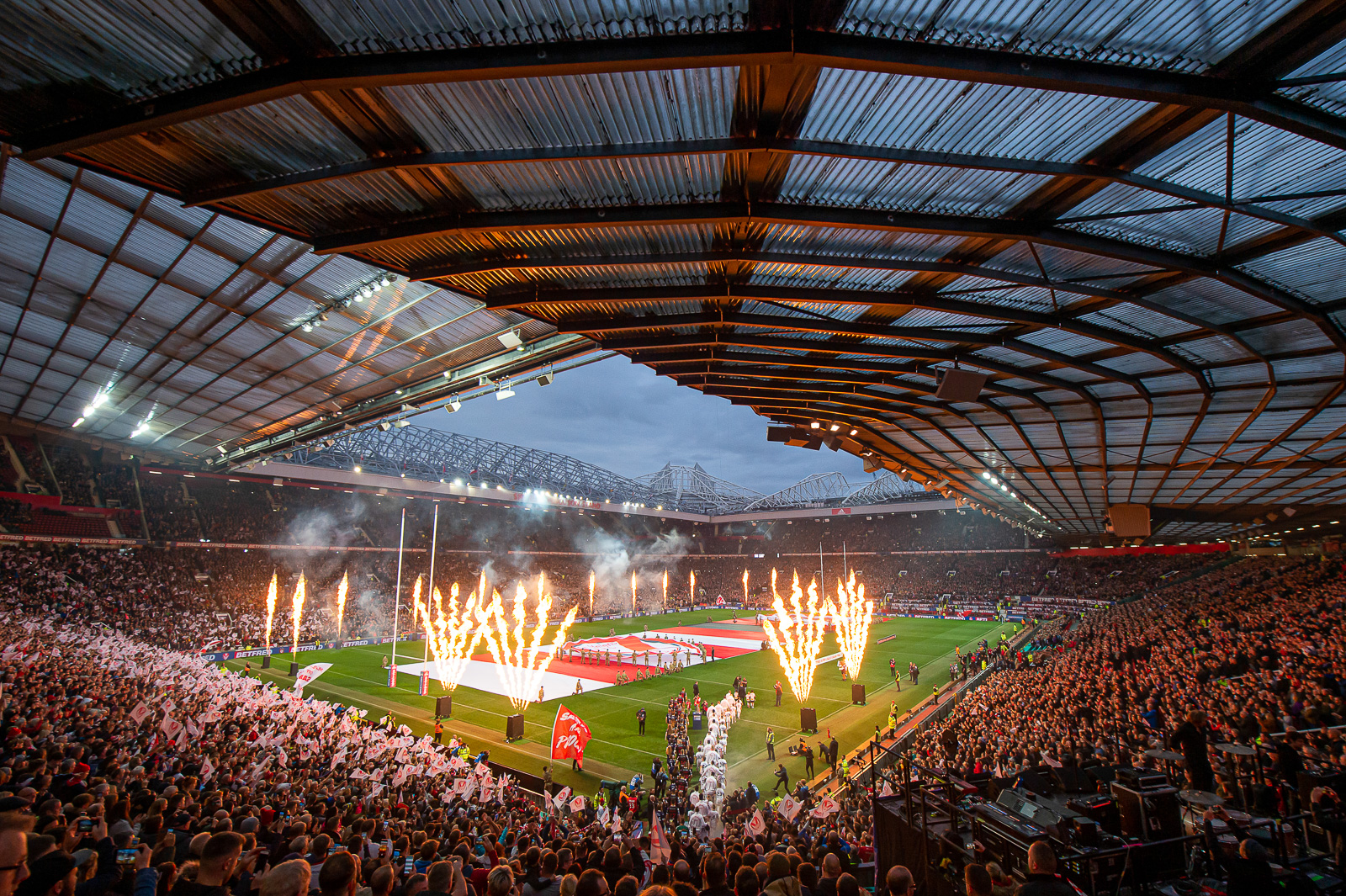
Old Trafford, Manchester – Super League Grand Final
Super League
Since its creation in 1996, the Super League has been regarded as the most competitive and prestigious rugby league competition in Europe.
The Super League was born in February 1996 at the Stade Charléty in Paris with the match PSG vs Sheffield, played in front of 17,000 spectators. Cameras from Sky Sports and Canal+ witnessed the birth of Europe’s premier rugby league competition. Despite a magical night and an opening victory, the PSG team had to end its Super League adventure after just two seasons. Poor sporting results, combined with the difficulty French clubs faced in releasing players during the week to compete in both France and England, brought an end to an ambitious project: having a French team in the Super League. It would take another 10 years before a new French club was admitted into the English competition.
Today, the Super League brings together the 14 best rugby league teams in the Northern Hemisphere, including 12 English clubs and 2 French clubs. After a first experience in 2022, Toulouse is back in the Super League this season.
The Grand Final is played in Manchester, in the “home of football”, Old Trafford Stadium.
Challenge Cup
The Challenge Cup is the other major competition in which the Catalans Dragons compete. It is the oldest rugby league competition, and its final is traditionally played at Wembley Stadium in London. The final is one of the biggest events on the European sporting calendar. Challenge Cup matches are broadcast live on the BBC and attract more than 4 million viewers.
super league
MATCH
Biggest win: 76–6 (Dragons vs Widnes, 31/03/2012)
Biggest defeat: 60–12 (Leeds vs Dragons, 15/09/2006)
Highest attendance: 31,555 (vs Wigan at Camp Nou, Barcelona, 18/05/2019)
At Brutus: 11,856 (vs Wigan, 2/07/2016)
Tries:
Justin Murphy – 4 (vs Warrington, 13/09/2008)
Damien Cardace (vs Widnes, 31/03/2012)
Fouad Yaha (vs Salford, 21/07/2018 & vs Leeds, 23/03/2019)
David Mead (vs Huddersfield, 29/09/2018)
Conversions / Penalties:
Scott Dureau – 11 (vs Widnes, 31/03/2012)
Points:
Thomas Bosc – 26 (vs Salford, 19/05/2007)
SEASON
Tries:
Morgan Escaré – 28 (2014) (27 SL + 1 play-off)
Conversions / Penalties:
Thomas Bosc – 118 (2008)
Points:
Scott Dureau – 277 (2012)
Across all competitions
MATCH (all competitions)
Biggest win: 92–8 (Challenge Cup, Dragons vs York, 12/05/2013)
Biggest defeat: 62–0 (Challenge Cup, Hull FC vs Catalans, 12/05/2017)
Highest attendance: 31,555 (vs Wigan at Camp Nou, Barcelona, 18/05/2019)
At Brutus: 11,856 (vs Wigan, 02/07/2016)
Tries:
Justin Murphy – 4 (vs Warrington, 13/09/2008)
Damien Cardace (vs Widnes, 31/03/2012)
Kevin Larroyer (vs York, 12/05/2013)
Fouad Yaha (vs Salford, 21/07/2018 & vs Leeds, 23/03/2019)
David Mead (vs Huddersfield, 29/09/2018)
Brayden Wiliame (vs Doncaster, 11/05/2019)
Conversions / Penalties:
Thomas Bosc – 11 (vs Featherstone, 31/03/2007)
Scott Dureau – 11 (vs Widnes, 31/03/2012)
Points:
Thomas Bosc – 26 (vs Featherstone, 31/03/2007)
Thomas Bosc – 26 (vs Salford, 19/05/2007)
SEASON
Tries:
Morgan Escaré – 29 (2014) (27 Super League + 1 play-off + 1 Cup)
Conversions / Penalties:
Scott Dureau – 134 (2012)
Points:
Scott Dureau – 319 (2012)
INDIVIDUAL RECORDS
Youngest player: Lucas Albert – 17 years and 8 days (vs Widnes, 12/07/2015)
Oldest player: Steve Menzies – 39 years and 283 days (vs Hull FC, 13/09/2013)
Our honours list
- 2007 Challenge Cup Finalists
- 2009 Super League Semi-finalists
- 2010 Challenge Cup Semi-finalists
- 2014 Super League Semi-finalists
- 2018 Challenge Cup Winners
- 2020 Super League Semi-finalists
- 2021 League Leaders’ Shield Winners – Super League Grand Finalists
- 2023 Super League Grand Finalists